
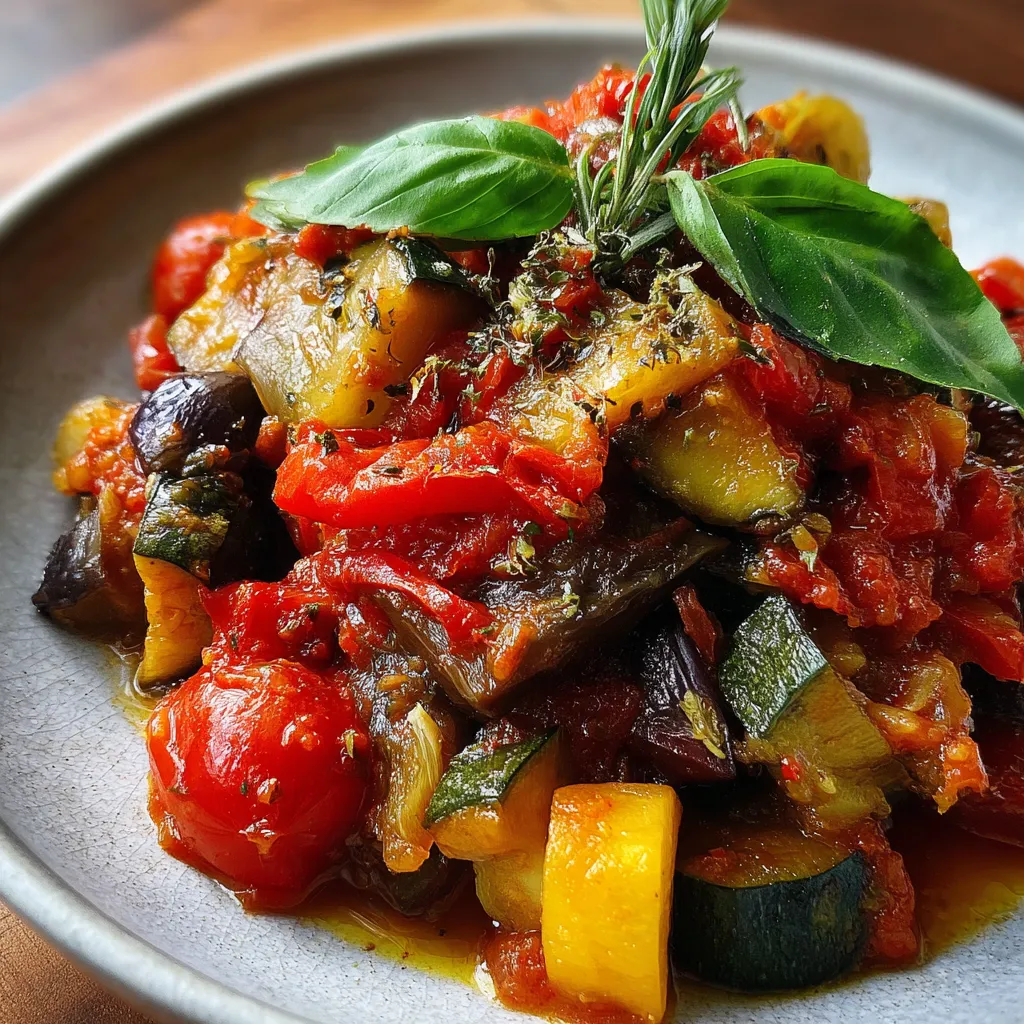
Hearty Slow-Simmered Mediterranean Ratatouille is a comforting melange of tender eggplant, zucchini, and vibrant bell peppers bathed in an herby tomato sauce. Slow-simmered for an hour to coax out the sweetness of ripe tomatoes and garlic-infused thyme, each bite feels sun-soaked and nourishing. As a vegan side or light main, it fills your kitchen with cozy warmth and invites you to savor every spoonful. Grab your apron, gather fresh veggies, and let’s transform simple ingredients into a soul-warming Mediterranean stew!
Key Ingredients
Before you begin, make sure you have these wholesome ingredients on hand. Each one plays a crucial role in building layers of flavor and texture:
- 2 tablespoons olive oil: Fragrant oil for sautéing aromatics and helping flavors meld.
- 1 large onion, diced: Adds sweetness and body once softened.
- 3 cloves garlic, minced: Infuses the dish with aromatic depth.
- 1 medium eggplant, diced: Provides a meaty, tender base that soaks up sauce.
- 2 medium zucchini, sliced: Offers silky texture and mild flavor contrast.
- 1 red bell pepper, diced: Brings sweetness and vibrant color.
- 1 yellow bell pepper, diced: Adds a touch of brightness and crunch.
- 4 large tomatoes, chopped: Forms the rich, juicy backbone of the stew.
- 2 tablespoons tomato paste: Concentrates tomato flavor for a deeper taste.
- 1/2 cup vegetable broth: Keeps the mixture moist and helps vegetables cook evenly.
- 1 teaspoon dried thyme: Lends an earthy, herb-infused aroma.
- 1 teaspoon dried rosemary: Contributes a pine-like fragrance and savory bite.
- 1 bay leaf: Releases subtle herbal notes during the slow simmer.
- 1/2 teaspoon sugar: Balances acidity and rounds out tomato sharpness.
- Salt to taste: Enhances all the natural flavors.
- Black pepper to taste: Adds a gentle heat and depth.
- Handful fresh basil leaves: Garnishes with bright, fresh herbal finish.
How To Make Hearty Slow-Simmered Mediterranean Ratatouille
This recipe is all about layering flavors through gentle cooking techniques and patient simmering. You’ll start by building an aromatic base, then introduce vegetables in stages to ensure each one retains its unique texture. Finally, a long, low simmer melds everything into a harmonious, rich tomato-herb sauce. Ready? Let’s walk through each step.
1. Heat 2 tablespoons of olive oil in a large, heavy-bottomed pot over medium heat and sauté the diced onion and minced garlic until they’re fragrant and translucent, about 3–4 minutes.
2. Add the diced eggplant, sliced zucchini, red bell pepper, and yellow bell pepper. Cook, stirring occasionally, until the edges of the vegetables begin to soften and take on a bit of color, about 5–7 minutes.
3. Stir in the chopped tomatoes, tomato paste, and vegetable broth to deglaze the pot. Sprinkle in the dried thyme, dried rosemary, sugar, salt, and black pepper, ensuring everything is well coated.
4. Nestle the bay leaf into the mixture, bring it to a gentle simmer, then reduce the heat to low and cover the pot with a tight-fitting lid.
5. Let the ratatouille cook undisturbed—stirring only occasionally—for 50–60 minutes, or until all the vegetables are very tender and the flavors have fully melded.
6. Remove and discard the bay leaf, taste the stew, and adjust the seasoning with additional salt or pepper if needed.
7. Garnish with a handful of fresh basil leaves just before serving to add a burst of color and fresh herb flavor.
Serving Suggestions
Once your ratatouille is bubbling with tender veggies and rich tomato sauce, it’s time to think about how to present it. Here are a few favorite ways to enjoy this Mediterranean classic:
- Serve over creamy polenta for a hearty, comforting meal that soaks up every drop of sauce.
- Pile onto toasted crusty bread as a rustic bruschetta or open-faced sandwich.
- Pair with grilled fish or chicken to add a vibrant, vegetable-packed side.
- Toss with warm pasta and a drizzle of extra virgin olive oil for a quick, satisfying dinner.
Tips For Perfect Hearty Slow-Simmered Mediterranean Ratatouille
A few insider tricks will have you looking like a ratatouille maestro. Embrace the relaxed pace of slow simmering, and don’t rush the melding of flavors. Patience is your best friend here—letting the vegetables soften slowly ensures a silky texture and deeply savory sauce. Use the ripest produce you can find; this recipe shines when each vegetable contributes its peak sweetness. Keep your knife skills consistent—uniform pieces cook more evenly and look gorgeous on the plate. Now, here are some practical notes to elevate your dish:
- Ratatouille develops deeper flavor when rested and reheated the next day.
- Peak-season, ripe vegetables yield the best taste and texture.
- Leftovers can be stored in an airtight container in the refrigerator for up to 4 days.
- Freeze any extra portions for up to 3 months, thawing overnight before reheating.
How To Store It
After enjoying a steaming bowl, you’ll want to save every last bite. Proper storage keeps your ratatouille tasting fresh and vibrant, even days later. Cool the stew to room temperature before refrigerating or freezing to protect texture and flavor.
- Refrigerate in airtight containers: Store cooled ratatouille for up to 4 days, keeping it airtight to prevent moisture loss.
- Freeze in portioned containers: For up to 3 months, freeze in freezer-safe containers or heavy-duty zip-top bags—flatten bags for quicker thawing.
- Thaw gently: Move frozen portions to the refrigerator overnight, allowing gradual thawing that preserves texture.
- Reheat slowly: Warm leftovers on the stove over low heat or in a 325°F oven until heated through to avoid overcooking.
Frequently Asked Questions
Here are some quick answers to help you master this ratatouille with confidence:
- Q: How long does it take to prepare and cook this ratatouille?
A: The recipe calls for about 15–20 minutes of prep time for chopping the onions, garlic, and vegetables, plus 50–60 minutes of gentle simmering. Altogether, you’re looking at roughly 1 hour 10 minutes to 1 hour 20 minutes from start to finish.
- Q: Can I substitute any of the vegetables or adjust the quantities?
A: Yes, you can swap in-season vegetables such as yellow squash, mushrooms, or bell peppers of different colors. Just aim for a similar total volume of produce so the liquid ratio stays balanced. Ensure all pieces are cut to a uniform size so they cook evenly, and adjust the seasoning and tomato paste slightly if you add juicy or starchy vegetables.
- Q: What is the role of the sugar in this recipe, and can I omit it?
A: The ½ teaspoon of sugar helps to balance the acidity of the tomatoes, rounding out the flavor. If you’re using exceptionally ripe, low-acid tomatoes, you can reduce or omit the sugar. Taste midway through cooking and add a pinch more only if the sauce tastes too tart.
- Q: How can I prevent the vegetables from becoming too soft or mushy?
A: Cut the eggplant, zucchini, and peppers into uniform, bite-sized pieces so they cook at the same rate. Maintain a gentle simmer on low heat, stirring only occasionally to avoid breaking down the vegetables. Keeping the lid slightly ajar for the last 10 minutes also helps excess moisture evaporate without overcooking the vegetables.
- Q: What are some recommended ways to serve and garnish this ratatouille?
A: Ratatouille is delicious spooned over creamy polenta, rice, or couscous, and it pairs well with crusty bread or grilled proteins. Finish with a scattering of torn fresh basil leaves or a drizzle of good-quality olive oil. A sprinkle of grated Parmesan or crumbled goat cheese works nicely if you aren’t keeping it strictly vegan.
- Q: Can I make this recipe in advance, and how do the flavors change after resting?
A: Absolutely. Ratatouille develops a deeper, more integrated flavor when cooled and reheated. You can make it a day ahead, store it covered in the refrigerator, and gently reheat on the stove over low heat. The resting time allows the herbs and tomato flavors to meld, yielding a richer taste.
- Q: How should I store leftovers, and what’s the best way to reheat or freeze portions?
A: Let the ratatouille cool to room temperature, then transfer to an airtight container. It will keep in the fridge for up to 4 days. To reheat, warm it slowly on the stove or in a 325°F oven until heated through. For longer storage, freeze in portioned freezer-safe containers for up to 3 months. Thaw overnight in the refrigerator before reheating.
What Makes This Special
This recipe shines because each step builds on the last, turning humble vegetables into a rich, herb-studded masterpiece that tastes even better the next day. The slow simmer lets flavors meld gradually, while fresh basil brightens every forkful. It’s fuss-free, vegan, and endlessly adaptable—perfect for weeknight dinners or gatherings. Feel free to print and tuck this guide into your recipe box, then come back and let me know how your own colorful ratatouille turned out. I’d love to hear your tweaks, stories, or any questions you have!
Print
Hearty Slow-Simmered Mediterranean Ratatouille
- Prep Time: 20 mins
- Cook Time: 60 mins
- Total Time: 1 hour 20 minutes
- Yield: 4 servings
- Category: Side Dishes
Description
Slow-simmered for an hour, this ratatouille fills the kitchen with garlic and thyme, coaxing out the sweetness of ripe tomatoes and eggplant. Each spoonful offers silky zucchini and peppers bathed in a fragrant, herb-studded tomato broth.
Ingredients
- 2 tablespoons olive oil
- 1 large onion diced
- 3 cloves garlic minced
- 1 medium eggplant diced
- 2 medium zucchini sliced
- 1 red bell pepper diced
- 1 yellow bell pepper diced
- 4 large tomatoes chopped
- 2 tablespoons tomato paste
- 1/2 cup vegetable broth
- 1 teaspoon dried thyme
- 1 teaspoon dried rosemary
- 1 bay leaf
- 1/2 teaspoon sugar
- Salt to taste
- Black pepper to taste
- Handful fresh basil leaves
Instructions
- Heat olive oil in a large pot over medium heat and sauté onion and garlic until fragrant and translucent.
- Add eggplant, zucchini, red bell pepper, and yellow bell pepper, cooking until edges begin to soften.
- Stir in chopped tomatoes, tomato paste, and vegetable broth, then add dried thyme, dried rosemary, sugar, salt, and black pepper.
- Nestle the bay leaf into the mixture, bring to a gentle simmer, then reduce heat to low and cover.
- Let the ratatouille cook, stirring occasionally, for 50–60 minutes until vegetables are very tender and flavors meld.
- Discard the bay leaf, adjust seasoning as needed, and remove from heat.
- Garnish with fresh basil leaves before serving.
Notes
- Ratatouille develops deeper flavor when rested and reheated the next day.
- Peak-season, ripe vegetables yield the best taste and texture.
- Leftovers can be stored in an airtight container in the refrigerator for up to 4 days.
- Freeze any extra portions for up to 3 months, thawing overnight before reheating.