
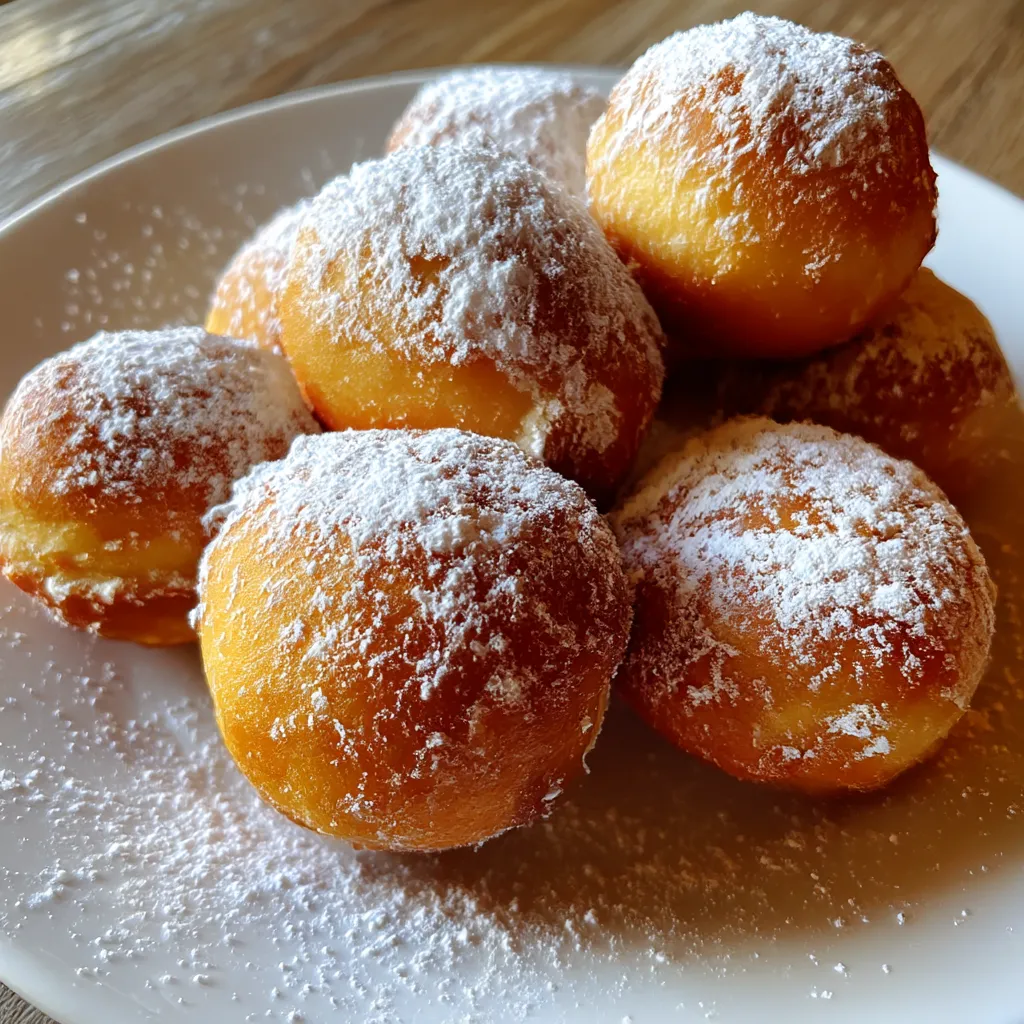
Vanilla French Beignets New Orleans-Style bring a taste of the Big Easy to your kitchen with cloudlike vanilla-kissed squares crisped in golden oil and showered with snowy sugar for a true French Quarter charm. Warm beignets emerge from the fryer with a crackling shell and soft, pillowy center, making each bite an irresistible sweet-airy treat that pairs perfectly with morning coffee or casual gatherings.
Key Ingredients
These simple pantry staples come together to create light, airy beignets bursting with vanilla flavor and a sweet, snowy finish:
- 250 g all-purpose flour: The base structure that creates tender, pillowy beignets.
- 50 g granulated sugar: Sweetens the dough and helps with browning during frying.
- 1/2 teaspoon salt: Balances sweetness and enhances the overall flavor.
- 1 teaspoon active dry yeast: Leavens the dough for light, airy puffs.
- 1 egg yolk: Adds richness and helps bind the dough together.
- 5 ml vanilla extract: Infuses the dough with warm, aromatic vanilla notes.
- 120 ml warm whole milk: Activates the yeast and yields a soft, moist crumb.
- 60 ml warm water: Works with milk to proof the yeast for a perfect rise.
- 30 g unsalted butter, melted: Adds tenderness and a subtle buttery flavor.
- Vegetable oil for frying: Provides a high-heat medium for crisp, golden beignets.
- Powdered sugar for dusting: Gives the signature snowy finish and sweet crunch.
How To Make Vanilla French Beignets New Orleans-Style
Get ready to transform a handful of ingredients into irresistible, cloudlike beignets. This recipe guides you through activating yeast, kneading the dough until smooth, proofing for that perfect rise, rolling and cutting uniform squares, frying to golden perfection, and finishing with a generous dusting of powdered sugar. Follow these steps for classic New Orleans charm right at home:
1. In a small bowl, combine warm milk, warm water, and active dry yeast. Stir gently and let sit for about 5 minutes until the surface becomes foamy, indicating the yeast is active.
2. In a large bowl, whisk together all-purpose flour, granulated sugar, and salt until evenly distributed, creating a uniform base for your dough.
3. Add the yeast mixture, egg yolk, vanilla extract, and melted butter to the dry ingredients. Stir until they form a soft dough that comes together.
4. Turn the dough onto a lightly floured surface and knead for about 5 minutes until it is smooth and elastic, which helps develop gluten for a better rise.
5. Place the dough in a lightly oiled bowl, cover with a clean towel, and let rise in a warm place for 1 to 1½ hours, or until it has doubled in size.
6. Punch down the dough to release excess air, then transfer to a floured work surface. Use a rolling pin to roll out the dough to about 6 mm thickness.
7. Cut the dough into 5 cm squares using a sharp knife or pizza cutter, ensuring each piece has clean edges for even frying.
8. Heat vegetable oil in a deep pot or fryer to 180 °C, using a thermometer to maintain a consistent frying temperature.
9. Fry the beignet squares in batches for 2 to 3 minutes per side, or until they are puffed and golden brown, turning carefully so they cook evenly.
10. Use a slotted spoon to remove the beignets from the oil and transfer them to paper towels to drain any excess oil.
11. Generously dust the warm beignets with powdered sugar, shaking off any extra to avoid clumps.
12. Serve immediately while still warm for the best light and airy texture, and enjoy!
Serving Suggestions
Whether you’re hosting a brunch, celebrating Mardi Gras, or simply craving a sweet indulgence, these Vanilla French Beignets are delightfully versatile. Crisp on the outside and pillowy within, they partner beautifully with hot beverages, fruit, and even ice cream. Here are some fun ways to plate them and elevate your serving game:
- Classic Coffee Pairing: Serve the hot beignets alongside a strong café au lait or espresso for a traditional New Orleans café experience.
- Fruit Compote: Drizzle warm berry compote over the beignets to add a bright, tart contrast to their sweet vanilla flavor.
- Cinnamon Sugar Twist: Mix powdered sugar with a pinch of ground cinnamon, then dust the beignets for an extra layer of warm spice.
- Ice Cream Sandwiches: Slice a beignet in half, fill with vanilla bean ice cream, and gently press to make an indulgent dessert sandwich.
Tips For Perfect Vanilla French Beignets New Orleans-Style
Nailing the perfect beignet can feel like a magic trick, but with a few friendly reminders, you’ll be whipping up fluffy, golden squares every time. Keep your ingredients and equipment in check, and you’ll turn out café-worthy beignets in no time:
- Make sure milk and water are not too hot to avoid killing the yeast.
- The dough should be soft but not sticky; adjust flour as needed.
- Fry in batches to maintain oil temperature.
- Serve immediately for best texture and flavor.
How To Store It
Leftover beignets can be tricky to keep crisp, but with the right storage methods, you can enjoy them later without sacrificing too much of that signature cloudlike texture. Follow these tips to preserve freshness and flavor:
- Airtight Container at Room Temperature: Once completely cooled, place the beignets in a sealed container for up to 4 hours to keep them from going stale.
- Oven Reheat: Preheat your oven to 175 °C and warm the beignets for 3–5 minutes to restore crisp edges without making them soggy.
- Freezer Storage: Flash-freeze beignets on a baking sheet, then transfer to a resealable bag; reheat in a warm oven for about 5 minutes.
- Avoid Microwave: Steer clear of microwaving, as it will make the beignets chewy and soggy rather than crispy.
Frequently Asked Questions
Got questions bubbling up like warm dough? Here are answers to the most common queries:
- How long does it take to prepare and cook these Vanilla French Beignets New Orleans-Style?
Total time is roughly 2 to 2½ hours. You’ll spend about 15 minutes mixing ingredients and kneading the dough, 1 to 1½ hours proofing until it doubles in size, another 15 minutes rolling and cutting, and about 10 to 15 minutes frying in batches. Allow a few extra minutes for dusting and serving.
- Can I substitute instant yeast for active dry yeast in this recipe?
Yes. Use the same weight (1 teaspoon or approximately 3 g) of instant yeast, but whisk it directly into the dry ingredients instead of proofing in the warm liquids. You may need to add a tablespoon of warm water if the dough seems too dry. The rising time remains about the same.
- What’s the best way to ensure my beignets turn out light and airy?
First, make sure your milk and water are warm (around 40 °C) but not hot, to keep yeast active. Knead the dough until it is smooth and elastic, which develops gluten for lift. Don’t let the dough get too sticky—add flour sparingly if needed. Proof in a warm, draft-free spot so the dough doubles fully. Finally, fry at a consistent 180 °C and avoid overcrowding the pot.
- How do I maintain the oil temperature at 180 °C for frying?
Use a deep-fry or candy thermometer clipped to the pot’s side, adjusting the heat as needed. Fry in small batches—2 to 3 pieces at a time—so the oil temperature doesn’t drop drastically. If the oil cools, the beignets will absorb excess oil and become greasy.
- Why did my beignets turn out oily and dense?
Oily, dense beignets usually mean the oil temperature was too low or the dough was over-hydrated. Ensure the oil stays at 180 °C and fry in small batches to keep heat steady. If your dough felt overly sticky, you likely added too much liquid or insufficient flour; knead in a little more flour until the dough is soft but not tacky.
- Can I prepare the dough ahead of time and refrigerate it?
Yes. After kneading, cover the dough well and refrigerate for up to 12 hours. Before rolling, bring it to room temperature (about 30 minutes), then proceed with punching down, rolling, cutting, and frying. An overnight cold ferment can even enhance the flavor.
- How should I store any leftover beignets?
Beignets are best enjoyed immediately for maximum crispness. If you must store leftovers, place cooled beignets in an airtight container at room temperature for up to 4 hours. Reheat gently in a 175 °C oven for 3–5 minutes; avoid microwaving, which will make them soggy. Dust again with powdered sugar just before serving.
What Makes This Special
There’s a reason these Vanilla French Beignets New Orleans-Style have captured hearts from the French Quarter to your kitchen: the light, crackling shell and dreamy, vanilla-scented interior bring a grin with every sugary bite. This recipe works thanks to simple dough, a touch of yeast magic, and a quick fry before a snowy sugar shower. Print and save this article in your recipe binder for a reliable sweet fix, and leave a comment if you try it or have questions—your next beignet triumph awaits!
Print
Vanilla French Beignets New Orleans-Style
- Prep Time: 35 mins
- Cook Time: 15 mins
- Total Time: 50 minutes
- Yield: 4 servings
- Category: Desserts
Description
Warm beignets emerge from the fryer with a crackling crisp shell and soft, pillowy centers infused with vanilla. A blitz of powdered sugar melts into every crevice, offering sweet, airy bites in every mouthful.
Ingredients
- 250 g all-purpose flour
- 50 g granulated sugar
- 1/2 teaspoon salt
- 1 teaspoon active dry yeast
- 1 egg yolk
- 5 ml vanilla extract
- 120 ml warm whole milk
- 60 ml warm water
- 30 g unsalted butter melted
- vegetable oil for frying
- powdered sugar for dusting
Instructions
- In a small bowl combine warm milk, warm water and active dry yeast; let sit for 5 minutes until foamy.
- In a large bowl whisk together flour, granulated sugar and salt.
- Add the yeast mixture, egg yolk, vanilla extract and melted butter to the dry ingredients and stir until a soft dough forms.
- Turn the dough onto a lightly floured surface and knead for about 5 minutes until smooth and elastic.
- Place the dough in a lightly oiled bowl, cover with a clean towel and let rise in a warm place for 1 to 1½ hours until doubled in size.
- Punch down the dough and transfer to a floured work surface; roll out to about 6 mm thickness.
- Cut the dough into 5 cm squares using a sharp knife or pizza cutter.
- Heat vegetable oil in a deep pot or fryer to 180°C, maintaining temperature with a thermometer.
- Fry the beignet squares in batches for 2 to 3 minutes per side, until puffed and golden brown.
- Use a slotted spoon to transfer beignets to paper towels to drain excess oil.
- Generously dust the warm beignets with powdered sugar.
- Serve immediately for the best light and airy texture.
Notes
- Make sure milk and water are not too hot to avoid killing the yeast.
- The dough should be soft but not sticky; adjust flour as needed.
- Fry in batches to maintain oil temperature.
- Serve immediately for best texture and flavor.